
 10 Sep 2008

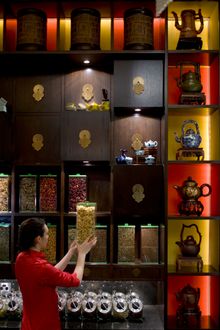
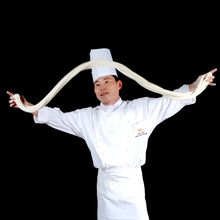
September 2008�. Crown Melbourne is thrilled to announce the opening of Sho Noodle Bar, an exciting new restaurant that boasts live noodle-making demonstrations twice every evening at 6pm and 9pm and offers handmade noodles by Master Chef, Pin Tan, authentic Asian cuisine, as well as a tea station showcasing 24 of the world�s finest teas from China and Taiwan.
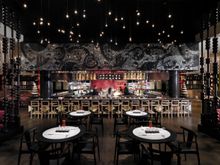
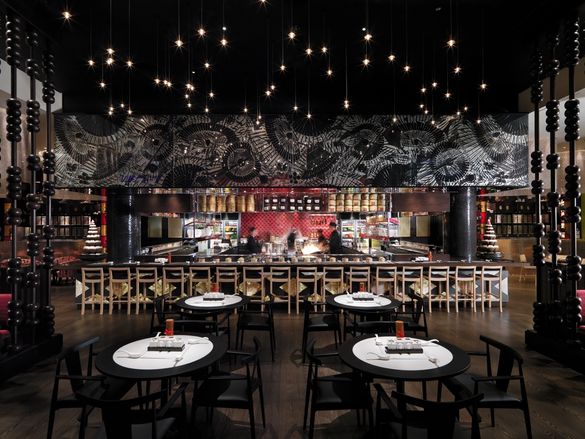
Located on the main gaming floor at Crown and close to the complex�s main atrium, the restaurant features an open kitchen with seating for 38 diners, two dining areas and a tea salon which offers tea expertly prepared and served by the restaurant�s own tea master, a tea kung fu master and national award winner in his native China.
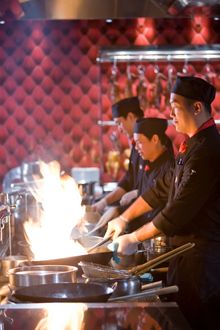
Guests� appetites are instantly stimulated at the sight and smell of five chefs, working simultaneously over steaming stock pots, dim sim baskets, woks, satay and noodle stations. Racks of hanging roast ducks, glass chillers bursting with fresh vegetables and herbs and traditional Asian spices line up under glass along the restaurant�s bar add to the restaurant�s theatrical atmosphere.
On arrival, guests will notice two tea mountains which are perched on the restaurant�s bar and according to the principles of feng shui bring good luck.
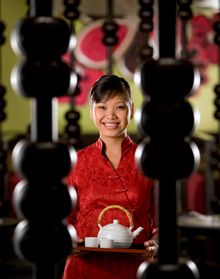
Designed by renowned Melbourne-based architects and interior designers, Bates Smart, the restaurant is adorned with a number of mesh chandeliers, two over-sized abacus bead screens, a silk-appliqu�d wall, wooden floors and custom-made furniture.
Sho�s menu includes traditional dim sum such as siu mai, prawn har gow, Shark�s fin, scallop and vegetable dumplings and chicken buns. Sho�s chef de cuisine, Pin Tan�s Malaysian heritage is evident in the chicken and beef satays, Nonya-style curries and Malaysian-style beef rendang, Malay Nasi Lemak, Penang-style chicken rice as well as in the noodle soups and wok-fried noodle dishes. A total of nine types of noodles appear on the menu including, egg, udon, rice vermicelli, glass, flat rice, yellow, E-fu, crispy and hor fun noodles.
Sho specialty dishes include wok-fried pipis with spicy bean paste and celery, deep-fried baby barramundi with chilli oyster sauce and coriander and wok-fried crayfish with honey chilli and spring onion among others. Curries, congee, roasts and rice dishes complete the menu.
The restaurant�s extensive tea selection includes teas which have been maturing for up to 35 years, called Pu�Er tea, yellow and white chrysanthemum, green, white, black, oolong, jasmine teas and more.
Sho does not take bookings and is available for lunch and dinner 7 days a week. Master Chef, Pin Tan�s noodle-making demonstrations take place nightly, Tuesday- Saturday from 6pm- 6.15pm and 9pm- 9.15pm. For more information about Crown restaurants, please visitcrownrestaurants.com.au or email tarab@crownmelbourne.com.au
Editor�s Note
History of Noodles
China has long been recognised for the creation of noodles, with the first written account dating back over 4000 years ago. Chinese rulers were the first to enjoy noodles, but as they became known for their high nutritional value, they were quickly embraced by others. Noodle shops became very popular in many Chinese cities, with locals gathering to enjoy tasty dishes throughout the day and night.
In recent times, noodles have become a staple of Asian cooking and diet, they are served as a main meal, as a side dish or eaten as a snack, especially when served in flavoursome broths.
Noodles have become an important part of most regional cuisines within mainland China, as well as in Taiwan, Singapore, Malaysia and other Southeast Asian nations.
In Asia, eating noodles is a symbol of longevity. It is common for noodles to be served at special occasions such as Chinese New Year, birthdays and weddings to ensure a long life.
History of Tea
According to popular belief, tea was discovered by Chinese Emperor Shennong when a leaf from a Camilla tree fell into water that the emperor was boiling. Not everyone agrees with the origin, but no one disputes that tea is deeply woven into the history and culture of China. Tea is often considered as one of the seven requirements of Chinese life, along with firewood, rice, oil, salt, sauce and vinegar. The ancient Chinese originally used tea for medicinal purposes and over time these were later developed to what we now know as tea. To this day, tea is said to possess healing benefits, aiding with fever, digestion and headaches. China has a long history of growing teas across mainland China. Just like wine, tea from different districts embody different characteristics, including flavour, colour and aroma. Chinese tea can be divided into six categories, including green tea, white tea, red tea, black tea and scent or floral tea. Recent Awards at Crown Recently, four of Crown�s restaurants were awarded with accolades at the recent The Age Good Food Guide 2009 awards. Bistro Guillaume was named Best New Restaurant and Giuseppe Arnaldo & Sons won in a new award category for Best New Interior Design. Bistro Guillaume and Rockpool Bar & Grill were both awarded two chefs� hats while the brasserie by Philippe Mouchel and Giuseppe Arnaldo & Sons each received one chefs� hat.
In early August, Crown was also awarded three prestigious awards at the 2008 Victorian Restaurant and Catering Awards for Excellence. Silks was named Best Chinese Restaurant in Victoria and was inducted into the Hall of Fame having received this accolade for three years in a row. Koko was named Best Asian Restaurant in Victoria and Crown�s Food and Beverage team were bestowed with an award for Excellence in Professional Development and were inducted into the Hall of Fame as a result of achieving this recognition for three consecutive years.

