

 26 Oct 2012

Interdepartmental Collaboration Drives Ocean Park’s Educational Green Dining Experience
With global capture and aquaculture production of fish and other aquatic animals continuing to rise at an alarming rate, scientists have predicted that seafood will no longer be available by 2048 if the current trend remains unchanged. As an advocate of conservation, Ocean Park takes the lead in driving an educational green dining experience in a joint effort by its various departments, including Food and Beverage, Conservation and Education. Starting from September this year, all of the seven restaurants it operates, including its bakery, began using only sustainably sourced seafood in its seafood dishes. This aims to inspire the community to help protect the marine ecosystem and ensure a sustainable food supply for future generations.
Mr. Timothy Ng, Deputy Director of the Ocean Park Conservation Foundation, Hong Kong (OPCFHK), said, “According to the latest report by the United Nations Food and Agriculture Organization (UNFAO), Hong Kong ranks second in seafood consumption per capita among Asian regions and countries. The Agriculture, Fisheries and Conservation Department (AFCD) also revealed that local capture fisheries have been declining for several decades – from an average of 120,000 tons per year in the 1980’s to around 50,000 tons recently – they can only meet around 30% of local demand. Imports from overseas have been needed to fill the big gap. At the same time, global capture and aquaculture production of fish and other aquatic animals continue to rise at a rate that is severely depleting marine resources. If this situation continues, it has been forecast that seafood will no longer be available by 2048. So we cannot afford to delay our conservation efforts.”
Mr. Ng continued, “WWF-Hong Kong has produced a Sustainable Seafood Guide by assessing the different wild-caught and farmed seafood species according to their origins, fishing/farming methods, status of wild population/fry sources, bycatch, fisheries/aquaculture management and information from the Marine Stewardship Council. The aim is to promote well-managed fisheries and to dissuade the public from consuming specific species from various origins. Many of the species to be avoided are popular among Hong Kong people. They include Bombay duck and shrimp caught by bottom trawling, which involves dragging heavy nets over the seabed. As their mesh size is small, the nets are extremely destructive to seabed communities, including juvenileDominofish,sponges, sea-fans, and soft corals. Hong Kong grouper, a common dish in local banquets in the past and the most expensive member of the grouper family, is another one to avoid. The population of this species in China has dropped by 90% over past decades, and it is now on the Red List of Threatened Species published by the International Union for Conservation of Nature (IUCN).”
Ocean Park cares about the marine ecosystem, and it has set clear objectives for promoting sustainable seafood to its more than seven million guests each year, as well as the public, letting them know about the severe threats facing marine resources. OPCFHK conducted a sustainable seafood pledge campaign at the Park’s Grand Aquarium in April, July, August and December 2011, and April 2012. More than 42,000 guests pledged not to consume shark (fins), blue fin tuna and Napoleon wrasse, three iconic endangered species.
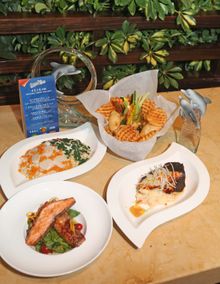
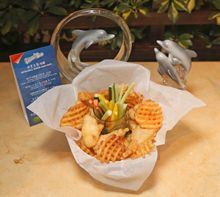
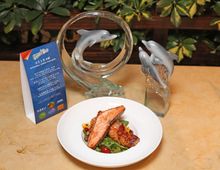
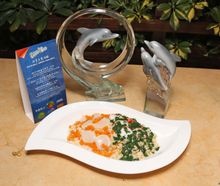
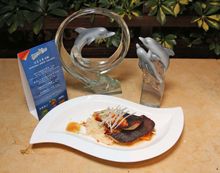
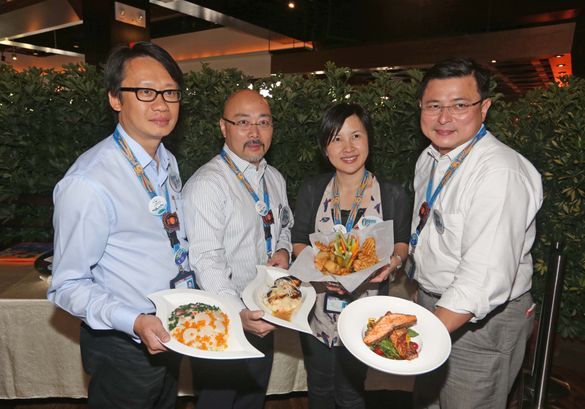
Ocean Park became the first theme park in Hong Kong to ban shark’s fin soup when it stopped serving the dish in its restaurants and staff dining facilities in 1995; and in 2009, the Park started offering sustainable seafood dishes. Mr. Nick Lee, Ocean Park’s Senior Food and Beverage Operations Manager, explained, “Ocean Park has taken the initiative to become a role model by adopting the use of sustainable seafood. We achieved this by reviewing our existing seafood supplies, establishing procurement procedures and policies, regularly revising our menus, introducing new sustainable seafood dishes, educating our staff so that they know how to promote sustainable seafood to our guests, and displaying promotional materials in our restaurants. We have taken this approach to a new level in the industry by serving only sustainable seafood in all the restaurants and the bakery that we operate. To show that sustainable seafood offers amazing variety and tastes, we have created some mouth-watering new dishes, including Deep-Fried Seafood Basket with Vegetables; Crispy Crusted Pacific Salmon Fillet with Asparagus and Sun-Dried Tomatoes; Roasted Cod Fillet with Miso Sauce; and Fried Rice with Lobster and Scallops in Duo Sauce. Moreover, Ocean Park became the first theme park in Asia to be awarded ISO22000 certification in April 2011. This covers catering services by Café Ocean, Panda Café, Aqua City Bakery, Terrace Café, Bayview Restaurant and Neptune’s Restaurant; as well as our central processing unit, warehouse and logistics operation.”
Ocean Park's Education Department is also fully geared up to join in the promotion of sustainable seafood. Ms. Isabel Li, Ocean Park’s Senior Education Manager, said, “The Park’s Education Department will set up a booth to promote sustainable seafood in Neptune’s Restaurant every Saturday, Sunday and public holiday during November and December. Guests will be invited to identify sustainable seafood menus, and they will be rewarded for doing so with appropriate souvenirs. In addition, Ocean Park Academy, Hong Kong (OPAHK) offers educational activities for different guests to inform them about the importance of sustainable seafood for the health of the marine ecosystem. Our liberal studies subject for Secondary 4 to 6 students focuses on the behaviour of fish, the impact of trawling on the marine ecosystem, the roles of fishermen and the government in sustainable fisheries, and the use of the Sustainable Seafood Guide. As well, our Summer School programme for students aged 8 to 15 talks about the current status of the seafood items we often consume, and how sustainable seafood helps to reduce the threat faced by the marine ecosystem. Other programmes for guests and the public include the Little Chef’s Fishy Academy, an interactive cooking workshop; Nighttime in the Ocean’s Depths, a nocturnal experience unveiling the mysterious world of the seabed, educational tours for SmartFun members as well as educational panels and exhibits at the Grand Aquarium. All these are helping to promote sustainable seafood.”
–End–
About Ocean Park
Ocean Park is Hong Kong’s unique home grown theme park with a heritage of delivering family fun and fond memories. Since its opening in January 1977 as a non-profit organisation, Ocean Park has developed itself to be a world-class attraction connecting people with nature, and recognised for its animal husbandry, research and relationship with the community. Over 110 million people have visited Hong Kong's premier park since its inception, and Ocean Park has remained committed to offering adults and children experiences that blend entertainment with education and conservation. Part of the proceeds from Ocean Park admission tickets and some retail items will go to Ocean Park Conservation Foundation, Hong Kong to support its wildlife conservation projects.
Ocean Park – Giving Back to the Community
As Hong Kong’s People’s Park, Ocean Park has launched different community initiatives to enable Hong Kong people from all walks of life to enjoy the Park’s offerings. These initiatives include 1) concessionary admission for Hong Kong residents on their birthdays, Hong Kong residents aged 65 years and above, and holders of Registration Card for People with Disabilities; and 2) sponsored admission to individuals and members of families receiving assistance from the Comprehensive Social Security Assistance Scheme (CSSA), and Social Welfare Department member organizations. The Park also gives donation-in-kind to charitable organizations, offers special rates for school tours, and spearheads many other community caring projects. During the fiscal year of 2010-2011, Ocean Park maintained a total of 13 social care programmes, with over 450,000 beneficiaries and an aggregate value to the community equivalent to HK$110,000,000.
About Ocean Park Academy
Ocean Park Academy, Hong Kong is the education arm of Ocean Park Hong Kong. Within the diversified environs of Ocean Park, and in an integrated and sustainable manner, it offers participatory and fun-filled programmes on nature and conservation to enrich learners of all ages.
Ocean Park Academy houses a dedicated team of over 40 talented educators to foster the importance of habitat and wildlife conservation in Hong Kong’s youth. During the 2011/2012 fiscal year, a record high of over 61,000 students ranging from kindergarten (age 3-5) to secondary 4-6 (age 15-17) took part in some 2,400 courses. This brought the total number of students that have benefited from our courses to 630,000 since our education programmes were first launched in 1992.
About Ocean Park Conservation Foundation, Hong Kong
OPCFHK is committed to advocating, facilitating and participating in effective conservation of Asian wildlife, with an emphasis on Chinese white dolphins and giant pandas as well as their habitats through partnerships, fundraising, research and education. It envisions a world where Asian wildlife remains biologically diverse under the stewardship of humans, corporations and governments.
Since its inception in 1993, OPCFHK has allocated over $44 million to fund over 380 research projects on cetaceans, giant pandas and many other species. It also inspires university students to engage in field work as part of its University Student Sponsorship Programme in Wildlife Conservation. After the 2008 earthquake in Sichuan, OPCFHK established a Giant Panda Base Rebuilding Fund and donated equipment to the affected nature reserves to help them resume daily operations. Conservation study and habitat restoration efforts were also supported.
As a conservation charitable trust supporting conservation across Asian region, OPCFHK needs your support to sustain these efforts. Donate and join the newly launched Friends of the Foundation membership club now to make a difference! For details, please visit http://www.opcf.org.hk/en/fof.php.
For media enquiries, please contact:
Ocean Park Hong Kong Una Lau Tel: 3923-2601/9389-3827 Email: una.lau@oceanpark.com.hk
Miranda Ip Tel: 3923-2150 / 9621 0771 Email: miranda.ip@oceanpark.com.hk
Rosalia Leung Tel: 3923-2676 / 9492-6377 |
Weber Shandwick Shirley Wong Tel: 2533-9935 / 9174-3366 Email: shwong@webershandwick.com
Peryl Tse Tel:2533-9900 / 9140-2344 Email: ptse@webershandwick.com
|

