
 21 Sep 2017

1. Beauty and the abyss: Vienna celebrates Viennese modernism in 2018
A great deal has been published about Viennese Modernism and the heroes of that time: the painters Gustav Klimt and Egon Schiele, the psychoanalyst Sigmund Freud, the composer Gustav Mahler and their contemporaries – and rightly so. The Viennese modernity - that time around 1900 - when these and many other personalities created great works, is one of the most important art and culture epochs of the European history. In 1918, Vienna lost four important protagonists: Gustav Klimt, Egon Schiele, the architect Otto Wagner and the designer Koloman Moser who all died the same year. That period was also characterized by the greatest creative work and a political world-fervor. Due to the First World War, Vienna oscillated between "beauty and abyss".
“It must have been very interesting in Vienna back then...” – the Austrian writer Hermann Bahr hit the nail on the head when he came up with this observation on life in Vienna around 1900. Many of the best-known masterpieces of art, architecture and design associated with Vienna all over the world were created during this era: highlights include Gustav Klimt's Kiss, Egon Schiele's Wally Neuzil, Otto Wagner's Austrian Post Savings Bank and Koloman Moser's designs for the Wiener Werkstätte. These four protagonists were among the numerous individuals who played a defining role in making the fin de siècle period such an important time for art in Europe, and particularly Vienna. Klimt, Schiele, Wagner and Moser all passed away in 1918.
In 2018 – a century down the line – Vienna will be taking an in-depth look at the creative output of these and other exceptional artists of Viennese Modernism. A total of 15 exhibitions displayed at the greatest museums and galleries in Vienna will shed light on the most prominent and highly popular masterpieces of that period. www.viennesemodernism2018.info
2. A fairy-tale night out during Vienna's ball season
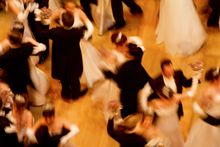
For more than two centuries Vienna has been the uncontested ball capital of the world. A unique blend of age-old Austrian traditions, magnificent court ceremonial and the trademark Viennese waltz has seen the capital's ball industry turn into one of the nation's best-loved exports with replica events playing out in around 30 cities worldwide, from New York to Shanghai. But nothing beats the original – the romance and charm puts the Viennese ball season in a league of its own.
Ball season starts each year on 11th November and runs until Ash Wednesday/ beginning of Lent, with its peak in January and February.
Specialized shops rent out ball gowns and tuxedos, and dancing schools offer blitz courses in waltzing and ballroom standards. A ride in a horse drawn carriage from a grand ball dinner to the splendid ball venue makes your fairy-tale night complete.
Next season's ball highlights
77th Philharmonic Ball 18st January, 2018 www.wienerphilharmoniker.at
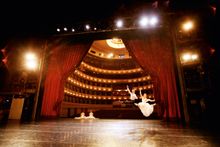
This ball enjoys the reputation of being a ball for artists organized by artists. The quality of the guests is said to be superior. The world-renowned Vienna Philharmonic orchestra holds its ball in the Golden Hall of the Musikverein, one of the world's most imposing concert halls, and familiar to TV viewers all over the globe as the venue of the New Year's Day Concert.
62st Vienna Opera Ball 8th February, 2018 www.wiener-staatsoper.at
The ball to end all balls plays out at the Vienna State Opera each year. It is a major get-together for leading cultural figures, captains of industry and high-ranking politicians from Austria and abroad.
61st Ball of the Coffeehouse Owners 18st January, 2018 www.kaffeesiederball.at
This ball is highly appreciated by the local population because of its typically Viennese ambience and is virtually regarded as a smaller version of the Opera Ball. It is the only ball to use all the ballrooms in the Hofburg, including the Redoutensäle and the elegant roof foyer with its view over night-time Vienna. It annually attracts around 5,500 visitors and dancers.
3. Young chefs reinvent Viennese cuisine
A boom in Michelin awarded restaurants and the best wine list in the world: Vienna offers an enticing variety to those who look for the exclusive pleasure in life. The long tradition of fusion cuisine and vineyards in the city make Vienna the place to go for authentic culinary treasures.
While Vienna is famous for its traditional signature dishes Schnitzel, Tafelspitz, Sacher cake and apple strudel, several young chefs started a new culinary style of Viennese cuisine - and were awarded a row of Michelin stars. Within only four years the number of certified Michelin star restaurants as well as the total number of Michelin stars in Vienna have doubled.
In 2017, Amador's Wirtshaus www.amadorswirtshaus.com, Mraz und Sohn www.mraz-sohn.at and Steirereck www.steirereck.at were awarded two Michelin stars each. Steirereck ranks #11 on the list of the World's 50 best restaurants. Edvard www.kempinski.com/vienna, Konstantin Filippou www.konstantinfilippou.com, Le Ciel www.leciel.at, Opus www.restaurant-opus.at, Tian www.tian-restaurant.com and Walter Bauer (no website) were awarded one Michelin star each.
... but don't forget about the wine!
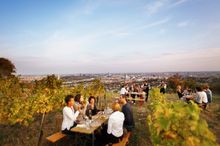
Wine was produced in Vienna since Roman times. The typical Viennese wine is a white wine, the "Wiener Gemischter Satz". For this kind of wine grapes of different varieties are planted, harvested and vinified together. From the 2013 vintage onwards, Wiener Gemischter Satz wines have enjoyed DAC status, a quality seal that guarantees their origin. In English, this result of the most natural mode of production is referred to as "field blend".
The wine archive at Palais Coburg is not simply a wine cellar, but a total of six different wine cellars in the historical vaults of the palace. 60,000 bottles are stored here, the oldest one being from the year 1727. The Coburg cellar, one of the world's best-stocked ones in the world, was given the rare Grand Award by American Wine Spectator, and was awarded “World's Best Wine List 2017” by The World of Fine Wine magazine (for the 2nd time after 2014). This spectacular wine cellar is also open to the public. Appointments can be made for daily tours and samplings – from the “wine stroll” including a glass of champagne, to samplings of rare wines. The Palais is also home to the five-star Palais Coburg Residenz hotel. www.palais-coburg.com
4. Vienna is the world-capital of music
Vienna is the world's uncontested capital of music: No other city has been home to so many composers – Mozart, Mahler, Haydn, Beethoven and Johann Strauss, the king of the Viennese waltz, all worked in the city. Every night in Vienna around 10,000 music fans are treated to live classical music, something that is simply unheard of in any other city in the world. Each year the Vienna concert schedule includes more than 15,000 events of various sizes and genres. In total, the three big opera houses in Vienna – Vienna State Opera, Volksoper and Theater an der Wien - hold 28 opera premieres this season 2017/18.
Musical highlights 2018
New Year's Concert by the Vienna Philharmonic Orchestra Dec 30th (dress rehearsal) and 31st, 2017 (New Year's Eve concert), and Jan 1st, 2018 www.wienerphilharmoniker.at
The Vienna Philharmonic Orchestra ushers in the new year with a light-hearted and festive concert featuring pieces from the extensive repertoires of Johann Strauss (father and son) and their contemporaries. The world-famous New Year's Concert from the Golden Hall at the Musikverein attracts live television audiences of around 50 million.
Due to exceptionally high demand, tickets can only (one exception: see below) be obtained for the New Year's Concert (Jan 1st), the dress rehearsal (Dec 30th) and the New Year's Eve concert (Dec 31st) via an online draw. Anyone hoping to get their hands on tickets must register on the Vienna Philharmonic website in January to enter the draw for the next New Year's Concert.
Maestro Riccardo Muti will conduct the concert in 2018. This will be the Italian's 5th time to lead the Vienna Philharmonic into a new year.
The New Year's Concert Special Package of the 5* Superior Palais Coburg Residence, member of the renowned Relais & Châteaux hotel association, includes not only two best category-tickets for this world-famous concert on 1st January, but also four nights in one of the most exclusive suites, a Grand Gala Dinner on New Year's Eve in the hotel's own Michelin starred restaurant, access to a highly exclusive New Year's party and many more luxurious experiences. Arrangement from €9,995, -- for two persons www.palais-coburg.com
Opera live on the Square April, May, June and September 2018 www.staatsoper.at
The world-famous Vienna State Opera will be broadcasting selected performances live and free of charge on a giant screen on the square outside. Admission is free, seats are provided.
Summer Night Concert May 31st, 2018 www.sommernachtskonzert.at
The Summer Night's Concert by the Vienna Philharmonic Orchestra in the grounds of Schönbrunn Palace is one of the major highlights of every year's concert calendar. On this evening the world-famous orchestra will bring its unrivalled splendour to classical music lovers in the magnificent baroque setting of Schönbrunn Palace park, completely free of charge. The 2018 concert is conducted by Maestro Valery Gergiev.
Danube Island Festival June 2018 www.donauinselfest.at
Every summer Europe's largest free open-air festival – the Danube Island Festival – draws in the crowds. An impressive 4.5km in length, the festival site features more than 10 stages and around 250 food, entertainment and shopping stalls offering everything from pop and chanson to jazz and electronic music. Annually the event draws around three million visitors.
Music Film Festival July and August 2018 www.filmfestival-rathausplatz.at
Each night the festival on the City Hall Square offers top music films representing a broad range of genres from opera to pop hits on the big screen. More than 20 food stalls with cuisine from all over the world invite for a pleasant evening with great music and international food. Admission is free.
5. The most liveable city in the world
In 2017, Vienna was named the world's most loveable city for the eighth time in a row in the “Mercer Quality of Life Survey”, which is annually conducted in 230 major towns and cities.
The survey compares the political, social and economic climate, medical care, education, and infrastructural conditions such as public transportation, power and water supply. It also takes into consideration recreational offers such as restaurants, theatres, cinemas, sports facilities, the availability of all kinds of consumer goods from food to cars as well as environmental conditions - from green space to air quality.
Vienna also gets top marks in other rankings:
EIU Liveability Ranking: # 2 worldwide
Vienna behind Melbourne
Source: Economist Intelligence Unit, Liveability Ranking, August 2016
Liveable Cities Index: # 2 worldwide
Vienna behind Tokyo
Source: Monocle, 25 most liveable cities, June 2017
Innovation Cities Index: #10 worldwide
Vienna behind London, New York, Tokyo, L.A, Paris, Singapore, San Francisco, Boston and Toronto
Source: 2thinknow Innovation Cities™, 2015
Personal Safety: # 5 worldwide
Vienna behind Luxemburg, Zurich, Helsinki and Bern
Source: Mercer: Personal Safety Ranking, London 2016
An everyday luxury that the locals take as a given is Vienna's fantastic quality drinking water. Fresh spring water flows into the city's homes from 30 natural sources in the Styrian and Lower Austrian Alps via two huge pipelines – without recourse to a single pump thanks to the natural gradient. Every drop that flows out of the capital's faucets has been subjected to a raft of strict quality control measures. During summer, there are hundreds of water fountains dotted all over the city to provide welcome – and free – refreshment for locals and visitors alike.
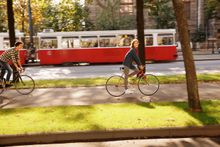
With around 50 percent of the city accounted for by green spaces, Vienna is one of the world's greenest big cities. The city limits are defined by a green belt of woodland, meadows, gardens and arable land. But the heart of the city is awash with pockets of green, such as the elegant parks on the Ringstrasse boulevard, the Prater park and the Baroque formal gardens of Schönbrunn Palace, and the Belvedere. Responsibility for looking after around 850 parks as well as the 100,000 trees that line Vienna's streets rests with the Parks and Gardens department. The plants in the capital's parks and gardens are grown under the expert supervision of the horticultural experts at the Hirschstetten nursery in the 22nd district. Each year the facility supplies 360,000 spring varieties, 1.5 million summer blooms, 60,000 autumn flowers and 1 million bulbs.

